6 May 2026
What Is a Moroccan Bath? Your Guide to the Hammam Ritual
Steam, black soap and the kessa glove — every stage of the Moroccan bath ritual, what to bring, aftercare advice and prices at our Abu Dhabi spa.
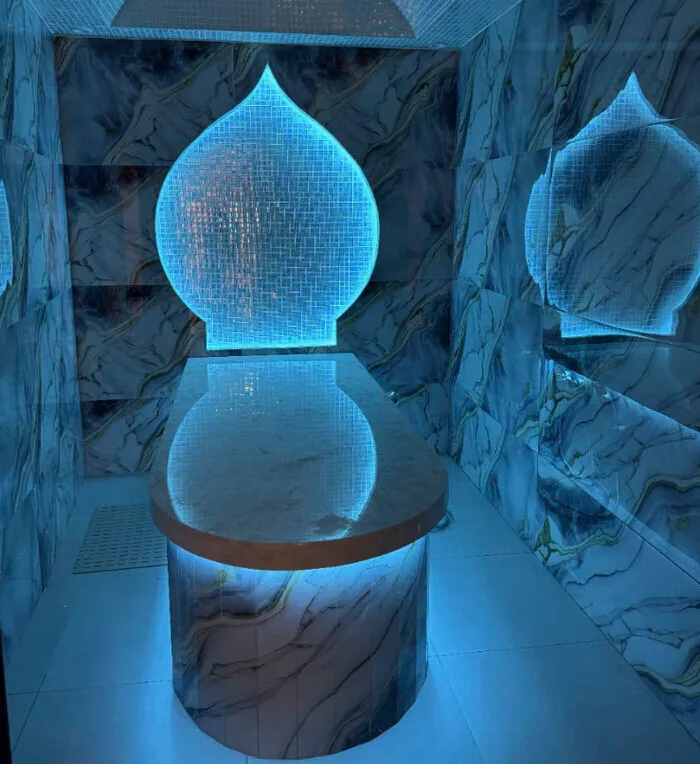
A Moroccan bath — also called a hammam — is a traditional deep-cleansing ritual performed for you by a therapist in a warm, steam-filled room. Your skin is softened with steam, lathered in olive-based black soap, exfoliated from head to toe with a kessa glove and finished with a warm rinse. At Rover European Spa in Abu Dhabi, the Standard Moroccan bath takes 45 minutes and costs 650 AED; the 60-minute Royal version is 850 AED.
An active ritual, not a sauna
The hammam tradition stretches back centuries across North Africa and the Middle East, where communal bathhouses were as much a social institution as a place to wash. What sets a Moroccan bath apart from a steam room you simply sit in is that everything is done for you, step by step, by a trained therapist. The sequence matters: heat first, then traditional products, then systematic manual exfoliation — each stage preparing the skin for the next.
That combination is why the result feels so different from any scrub you can manage at home. At Rover, the ritual is performed in complete privacy by one of our 19 multidisciplinary therapists, and the intensity of every stage is adjusted to your skin and your preference.
The hammam ritual, step by step
The Standard bath takes around 45 minutes and the Royal around 60. The timings below are approximate — a good therapist reads your skin rather than the clock.
Stage 1 — Warm steam (about 10 minutes)
You begin by reclining in a warm, steam-filled room while your body settles and your skin softens. Cleveland Clinic notes that steam can help soften the skin and loosen the oil and buildup in your pores — exactly the preparation that makes the exfoliation to come so effective. There is nothing to do here except breathe and let the heat work.
Stage 2 — Black soap, or savon beldi (5–10 minutes)
Next, an olive-based black soap is smoothed over the whole body and left to work for several minutes. Despite the name, it is a soft, almost buttery paste rather than a bar — a traditional Moroccan preparation that further softens the outermost layer of skin so it lifts away easily in the next stage.
Stage 3 — Kessa glove exfoliation (15–20 minutes)
This is the heart of the ritual. Using a traditional textured kessa glove, your therapist works over the body in long, firm, systematic strokes — and most first-timers are genuinely astonished by the visible rolls of dead skin that lift away. Exfoliation is more than a satisfying spectacle: as Cleveland Clinic explains, it removes the dead skin cells that can dull your complexion and clog your pores.
Stage 4 — Rhassoul clay and scalp treatment (Royal bath, 10–15 minutes)
In the Royal Moroccan Bath, a mineral-rich rhassoul clay — used in Moroccan beauty rituals for generations — is applied as a full-body mask, accompanied by a scalp treatment and extra massage moments. It is the stage that turns a thorough cleanse into a complete, unhurried ceremony.
Stage 5 — Warm rinse and rest (about 5 minutes)
A final warm rinse carries everything away. You are left clean in a way that is hard to describe until you have felt it — most guests spend the first minute simply running a hand over their own forearm in disbelief.
What to bring and what to expect
You do not need to bring anything: towels and every product used in the ritual are provided. Wear whatever you like to the spa — you will have a private room to change in, and you are covered appropriately throughout the treatment. Arriving ten minutes early gives you time to settle in rather than rushing from the lift to the steam.
Two things are worth mentioning when you book. First, tell us about any skin conditions, sunburn or recent waxing and laser sessions, so your therapist can soften the exfoliation or work around sensitive areas. Second, if you are unsure about the glove’s intensity, say so — the pressure is fully adjustable, and the first pass can be done lightly until you know how it feels.
Aftercare: keeping the glow
A little aftercare stretches the results considerably. Moisturise the same evening, while the fresh layer of skin absorbs product especially well. Drink water through the rest of the day too: time spent sweating in a warm, steamy room costs you fluids, and the NHS advises drinking more when you sweat due to heat.
Finally, put your home scrubs and exfoliating mitts away for a few days. The kessa has already done that work thoroughly, and Cleveland Clinic cautions that too much exfoliation can cause sensitivity or irritation. Treat the new skin gently for a day or two and it will repay you with a glow that lingers.
Standard or Royal — and how often?
The Standard Moroccan Bath (45 minutes, 650 AED) covers steam, black soap, kessa exfoliation and the warm rinse — the complete core ritual, and an ideal first visit. The Royal Moroccan Bath (60 minutes, 850 AED) adds the rhassoul clay mask and scalp treatment for the full traditional experience.
As for frequency, a monthly visit is the rhythm most of our regulars settle into. Dead skin accumulates gradually, so coming every three to four weeks keeps the results consistent while giving your skin time to renew between sessions.
Make it a full spa ritual
The classic pairing is a hammam followed by a massage, in that order: your muscles are already warm from the steam, and massage oil absorbs beautifully into freshly exfoliated skin. A Swedish massage is the favourite partner — gentle, flowing and the natural second act after the kessa’s brisk work. You can read more in our guide to the benefits of Swedish massage.
For a special occasion, our VIP spa packages build a longer journey around the steam room and oxygen jacuzzi, and a couples massage lets two of you finish the visit side by side.
Frequently asked questions
Does the kessa glove hurt?
No — it is vigorous rather than painful, closer to a brisk, firm sweep than a scratch. Your therapist adjusts the pressure to your skin, and most guests find the sensation deeply satisfying once the first pass is done.
How often should I have a Moroccan bath?
Every three to four weeks suits most people. More frequent visits are rarely necessary, as the skin needs time to renew the layer the kessa removes — monthly is the sweet spot our regulars return to.
Can I have a massage on the same day?
Yes, and we recommend it. Book the hammam first and the massage second: warm, freshly exfoliated skin makes the massage feel noticeably better, and the sequencing means you leave at maximum relaxation.
Is there a discount for Fazaa members?
Yes — Fazaa members receive 15% off. Mention your membership when booking, and remember that walk-ins are welcome whenever a room is free.
Book your Moroccan bath in Abu Dhabi
To book, message us on WhatsApp or call +971 56 288 2206 and tell us whether you would like the Standard or Royal ritual. Rover European Spa is on the 5th floor of Le Royal Méridien in Al Danah, Abu Dhabi, near the Corniche — open daily from 10 AM to 3 AM, so the hammam fits around even the busiest day.